CE Certified Hemostatic Agents Manufacturers & Factory

Elevating Surgical Safety with Advanced Active & Passive Biomaterial Hemostats for Global Clinical and Veterinary Applications

ISO 13485

Quality Standard Certified

95.36%

Customer Response Rate

≤ 3 Hours

Inquiry Response Time

300+

Professional Employees

Global Industry White Paper: Advanced Bio-Absorbable Hemostatic Agents

In modern surgical science, rapid and efficient hemostasis remains a fundamental determinant of patient outcomes, recovery speed, and overall procedure success. Whether in complex orthopedic reconstructions, spinal surgeries, emergency trauma care, or specialized veterinary orthopedics, the ability to control hemorrhage swiftly prevents systemic complications. While high-performance physical instrumentation establishes the framework for surgical stability, the utilization of CE certified hemostatic agents provides the bio-chemical mechanism to halt active bleeding where mechanical measures are insufficient or impractical.

1. Global Commercial & Industrial Status of Hemostatic Materials

The global market for hemostatic agents has transitioned from basic physical barriers to sophisticated, bioactive, and bio-absorbable matrices. Hemostatic agents are broadly categorized into three clinical groups:

  • Passive Hemostats: Rely on structured matrices (e.g., collagen, gelatin, oxidized regenerated cellulose) to provide a physical scaffold for platelet aggregation. These matrices are highly valued in orthopedics for their ease of use and structural integration inside deep bone cavities.
  • Active Hemostats: Incorporate biological clotting factors, predominantly thrombin, to directly catalyze the conversion of fibrinogen to fibrin at the wound site, bypassing the early stages of the body's natural coagulation cascade.
  • Adhesives and Sealants: Formulated using fibrin, synthetic polymers (polyethylene glycol), or albumin to seal tissue surfaces, stop capillary oozing, and prevent cerebrospinal or synovial fluid leaks.

Currently, the demand for CE marked bio-absorbable hemostatic agents is expanding. Rapid market growth is driven by the aging global demographic, the rise in complex cardiothoracic and orthopedic surgeries, and the expansion of advanced veterinary procedures. Global procurement networks are actively seeking manufacturers that can deliver high-volume sterile batches under stringent medical regulations.

2. Regulatory Framework & E-E-A-T Paradigm for Global Procurement

Importing and distributing hemostatic agents requires strict adherence to international regulatory baselines. As Class III (or Class IIb depending on composition and absorption profile) medical devices, these agents must meet rigorous standards to guarantee patient safety and biocompatibility:

  • CE Mark (EU MDR 2017/745): Compliance with the European Union Medical Device Regulation (MDR) is mandatory. The CE mark verifies that the product has undergone rigorous clinical evaluation, biocompatibility validation, and post-market surveillance.
  • ISO 13485:2016 Certification: Ensures that the manufacturing facility operates under a specialized Quality Management System (QMS) dedicated entirely to medical device safety and consistency.
  • Biocompatibility (ISO 10993): Exhaustive laboratory testing is required to verify that the hemostatic matrices do not cause cytotoxic, systemic, genotoxic, or inflammatory reactions when left inside the patient's body.
  • Sterilization Validation: Absolute sterility is ensured through validated Gamma Irradiation or Ethylene Oxide (EO) protocols, maintaining a Sterility Assurance Level (SAL) of 10-6.

3. China's Advanced Medical Manufacturing Advantage

China has established itself as a leading supplier of high-quality surgical consumables and medical instruments. The integration of advanced biotechnology clusters, coupled with cost-effective supply chain management, offers key advantages to international distributors:

  • Raw Material Traceability & Purity: Chinese factories leverage highly refined extraction processes for bovine, porcine, and plant-derived raw materials, ensuring exceptionally high purity levels for collagen, gelatin, and chitosan matrices.
  • State-of-the-Art Cleanroom Infrastructure: Factories operate Class 100,000 (ISO Class 8) and Class 10,000 (ISO Class 7) cleanrooms, strictly monitoring airborne particulate levels, microbiological contamination, and humidity to protect product integrity during formulation and packaging.
  • Vertical Integration: Major hubs combine the production of surgical instrumentation (such as orthopedic plates, saws, and stabilizers) with biological consumables, offering global distributors a comprehensive sourcing experience that reduces lead times and logistics costs.

4. Clinical Application Scenarios & Instrument Synergy

The application of hemostatic agents is rarely an isolated procedure; it is typically paired with specialized surgical instruments to manage bleeding in high-risk zones:

A. Orthopedic Trauma & Bone Grafting

During bone osteotomy, joint reconstruction (e.g., veterinary hip prosthesis implantation), or fracture fixation, cancellous bone surfaces can bleed continuously. Applying a pliable, bio-absorbable gelatin sponge or collagen fleece to the cavity stops capillary oozing, allowing surgeons to precisely position plates and screws without visual occlusion.

B. Spinal and Neurosurgery

In procedures like posterior cervical fixation, control of epidural bleeding is paramount. Highly conformable, non-swelling or minimally-swelling hemostatic sheets (such as oxidized regenerated cellulose) are carefully applied to neural structures to avoid compression while achieving immediate capillary stasis.

C. Veterinary Surgeries (TPLO & Small Animal Trauma)

In veterinary orthopedics, particularly during Tibial Plateau Leveling Osteotomy (TPLO) or complex canine fracture management, managing bone-surface bleeding is critical. Veterinary surgeons rely on cost-effective, highly reliable hemostatic agents alongside specialized veterinary surgical saw blades and adjustable plates to optimize operating room efficiency and patient recovery.

5. Strategic Procurement Parameters for B2B Importers

When selecting a manufacturing partner for CE certified hemostatic agents, global procurement managers must evaluate several critical performance metrics:

  • Absorption Timeline: The hemostatic matrix must degrade completely within a specified clinical window (typically 2 to 6 weeks) without leaving residues or causing foreign-body tissue reactions.
  • In Vivo Hemostatic Efficacy: The speed of clot formation—ideally under 3 minutes for minor oozing and under 5 minutes for moderate arterial/venous challenges.
  • Storage Conditions and Shelf Life: Stable shelf lives (typically 3 to 5 years at room temperature) are essential to prevent degradation during international transit and storage.
  • Custom Packaging & OEM Capabilities: Availability of multiple sizes, flowable forms, or sterile delivery applicators tailored to specific surgical specialties.

Industry Trends & Core Strengths

How technical innovation and strict compliance drive the future of surgical hemostasis and medical devices.

Advanced Biomimetic Hydrogels

Research is shifting toward responsive hydrogels that adapt to body temperature and pH, instantly sealing ruptured tissue surfaces and providing local drug delivery capabilities.

MDR Compliant Traceability

Each production run undergoes comprehensive bio-burden analysis, endotoxin evaluation, and raw material sequencing to comply fully with rigorous international medical safety standards.

Integrated Clinical Solutions

Combining biological solutions with surgical hardware minimizes operational variables, ensuring that clinical teams achieve predictable, reproducible hemostasis during complex surgeries.

Certified Enterprise Profile & Quality Systems

Discover the manufacturing standards, operational capacity, and technical infrastructure of our production center.

shenzhen HUL Healthcare Technology Co., Ltd. (Bopull Medical)

Verified Partner
Quality Certification
GB/T42061-2022 idt ISO13485:2016 International Standard Quality System Certification
Business Framework
Trading Company & Industrial Orchestration Partner
Operations Headquarters
Beijing & Shenzhen, China
Total Workforce
301 - 500 Skilled Professionals
Global Annual Sales
US$1.0 Million - US$2.5 Million
Inquiry Response Time
Within 3 Hours (Average Response Rate: 95.36%)
Client Reorder Rate
34% (Industry-Leading Repeat Purchase Index)

Company Summary: Bopull Medical operates strictly in accordance with international medical laws, regulations, and quality standards. By utilizing advanced production infrastructure and maintaining a highly technical, innovative engineering team, we deliver consistent quality that exceeds international client expectations.
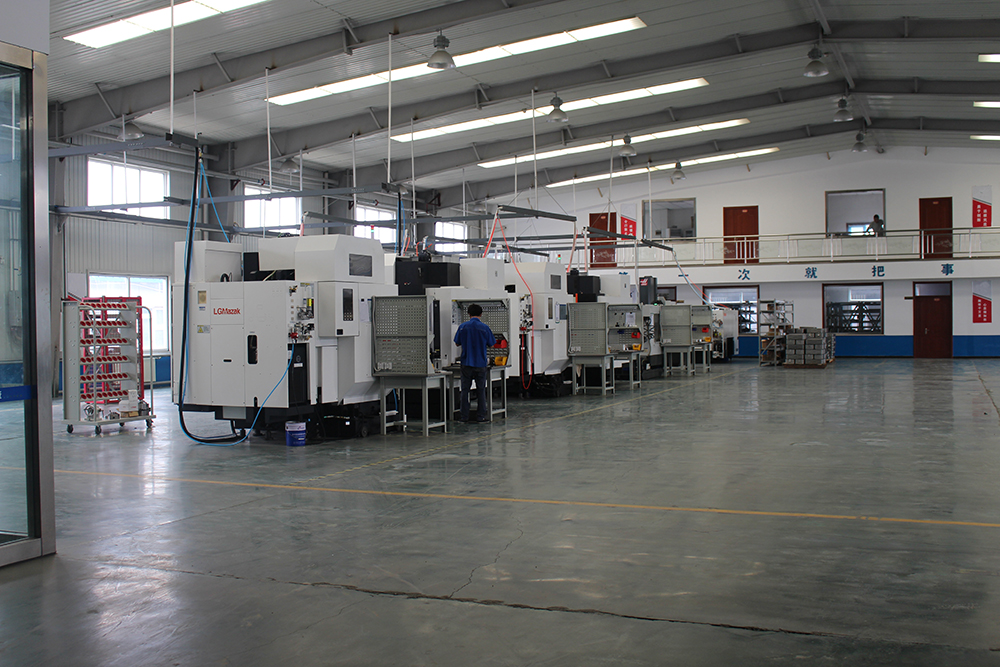

Bopull Medical Production Center Facility Image 1 Bopull Medical Quality Assurance Lab Image 2

Surgical Hemostasis FAQ

Expert answers to critical technical and regulatory questions concerning hemostatic agents and global medical sourcing.

Q1: What are the primary differences between oxidized regenerated cellulose (ORC) and gelatin-based hemostatic agents?
ORC is a plant-derived material that achieves hemostasis primarily by binding hemoglobin to form an acidic proteinaceous clot, acting as a physical matrix while demonstrating inherent antibacterial properties in vitro. Gelatin-based agents are animal-derived (porcine/bovine collagen) and act by absorbing up to 40 times their weight in blood, promoting platelet activation and structural tamponade. Both degrade bio-compatibly but differ in absorption times and tissue site preferences.
Q2: Why is the CE Mark (EU MDR) critical for purchasing hemostatic agents internationally?
The EU Medical Device Regulation (MDR 2017/745) classifies implantable, bio-absorbable materials under Class III devices. A CE mark indicates that the manufacturer has presented rigorous clinical data proving efficacy, validated sterile manufacturing processes, passed thorough biocompatibility screening (ISO 10993), and established a comprehensive post-market surveillance system.
Q3: How do bio-absorbable hemostatic agents impact bone-healing environments in orthopedic surgeries?
Advanced hemostatic agents are designed to minimize local tissue inflammation. Complete absorption occurs within 2 to 6 weeks, which prevents interference with osteogenesis, bone remodeling, or the secure placement of rigid orthopedic hardware (such as SOP pearl plates or pedicle screws).
Q4: What sterilization validation standards apply to hemostatic agents shipped from China?
Products must comply with ISO 11137 (Sterilization of health care products - Radiation) or ISO 11135 (Ethylene Oxide sterilization). This ensures a Sterility Assurance Level (SAL) of 10-6, verifying that the probability of a viable microorganism surviving on the product is less than one in a million.
Q5: Can veterinary surgeries utilize the same hemostatic agents certified for human clinical use?
Yes. The biological cascade for hemostasis is highly conserved across mammals. Veterinary surgeons frequently use human-grade hemostatic agents to manage major organ, vascular, or orthopedic bleeding during complex animal surgeries, ensuring equivalent outcomes.